Beyond the Refill Date: What Canadians Need to Know About Medication Expiration and the Risks of Stockpiling

There is a quiet assumption embedded in the way most Canadians manage their medications: if a prescription can be refilled, the medication itself must still be good. That assumption is worth examining carefully. The refill date on your prescription and the expiration date stamped on your medication bottle are two entirely separate pieces of information—and conflating them can have real consequences for your health.
With the rising cost of prescription drugs in Canada, the impulse to stockpile medications during periods of coverage or affordability is understandable. But stockpiling without understanding shelf life transforms a sensible precaution into a potential hazard. Before you set aside a three-month supply of anything, it is worth knowing what pharmaceutical expiration dates actually represent, how storage conditions affect stability, and which medications should never be used once their date has passed.
What an Expiration Date Actually Tells You
Health Canada requires manufacturers to conduct stability testing on all medications before they reach pharmacy shelves. The expiration date is not an arbitrary figure—it represents the last date on which the manufacturer can guarantee that the drug retains at least 90 percent of its labelled potency under specified storage conditions. Beyond that date, the manufacturer's guarantee ends.
This is an important distinction. An expired medication does not automatically become toxic the moment the calendar turns. In many cases, particularly with solid oral dosage forms such as tablets and capsules, the primary concern is reduced efficacy rather than immediate danger. A blood pressure tablet that has lost 15 percent of its potency may simply work less effectively than intended—a problem that is difficult to detect without monitoring and potentially serious depending on the condition being managed.
However, reduced efficacy is not the only risk. For certain drug classes, chemical degradation produces breakdown products that can be genuinely harmful. The pharmacological literature has long cited tetracycline antibiotics as a historical example of a class that can cause kidney damage when degraded, though modern formulations have largely addressed this specific concern. The broader principle—that some drugs degrade into harmful compounds—remains clinically relevant.
Drug Classes Where Expiration Is Non-Negotiable
Not all medications age equally. The physical and chemical properties of a drug's active ingredient, its formulation, and its delivery mechanism all influence how quickly it degrades. Several categories warrant particular attention for Canadian patients.
Liquid medications and suspensions are among the most time-sensitive. Oral antibiotics reconstituted from powder—commonly prescribed for children—typically carry a use-by window of seven to fourteen days once mixed with water. Insulin, whether in vials or pre-filled pens, follows strict post-opening timelines that differ from the sealed expiration date. Most insulin formulations should be discarded 28 to 30 days after first use, regardless of what remains in the vial.
Nitroglycerin is another critical example. Used for acute angina, this medication is notoriously unstable and should be replaced regularly—many cardiologists recommend discarding and replacing tablets every six to twelve months even if the expiration date has not passed, because exposure to light, heat, and air accelerates degradation rapidly.
Eye drops and topical ophthalmic preparations carry heightened contamination risk once opened, independent of their printed expiration date. Preservative-free formulations are especially vulnerable and are typically intended for single use.
Epinephrine auto-injectors (such as EpiPens) used for anaphylaxis are a particular concern in stockpiling scenarios. While some research has suggested that epinephrine retains activity beyond its labelled date, Health Canada and prescribing physicians consistently advise replacing expired auto-injectors without exception. In a life-threatening allergic emergency, a medication that delivers even marginally reduced epinephrine may be insufficient.
The Role of Storage Conditions
Pharmaceutical stability testing is conducted under controlled conditions—typically at defined temperature and humidity levels. The expiration date printed on your bottle assumes you have stored the medication accordingly. In practice, many Canadians store medications in locations that actively undermine shelf life.
The bathroom medicine cabinet, despite its name, is one of the least suitable places for most medications. The combination of heat and humidity generated by showers accelerates chemical breakdown. Similarly, kitchen storage near a stove or dishwasher exposes medications to repeated temperature fluctuations.
A cool, dry, dark location—such as a bedroom drawer or a dedicated shelf in a hall closet—is generally preferable. Medications that require refrigeration should be stored in the main compartment of the refrigerator, not in the door where temperatures fluctuate with opening and closing, and never in the freezer unless specifically directed.
For Canadians who travel regularly or live in climates with extreme seasonal temperature variation, the impact on medications left in vehicles or unheated storage spaces is worth considering. Freezing temperatures can affect certain liquid formulations, while prolonged heat exposure degrades many active compounds.
When Stockpiling Makes Sense—and When It Does Not
The instinct to maintain a reserve supply of essential medications is not unreasonable, particularly for Canadians in rural or remote communities where pharmacy access is limited, or for those managing chronic conditions who have experienced supply disruptions. The key is building that reserve thoughtfully.
For stable solid oral medications—many blood pressure drugs, thyroid medications, and certain psychiatric medications in tablet form—maintaining a modest buffer supply, stored correctly and rotated regularly, is generally low risk. The principle of rotation is essential: use older stock first and replenish from the newest supply, ensuring that nothing sits unused past its expiration date.
For the drug classes described above—insulins, liquid antibiotics, nitroglycerin, epinephrine auto-injectors, and ophthalmic preparations—stockpiling carries meaningful risk and should be approached with direct guidance from your pharmacist or physician.
Canadians filling prescriptions through a licensed online pharmacy have a practical advantage here: order history and dispensing records make it straightforward to track when medications were filled and to calculate realistic use-by timelines without relying solely on memory.
Checking What You Already Have
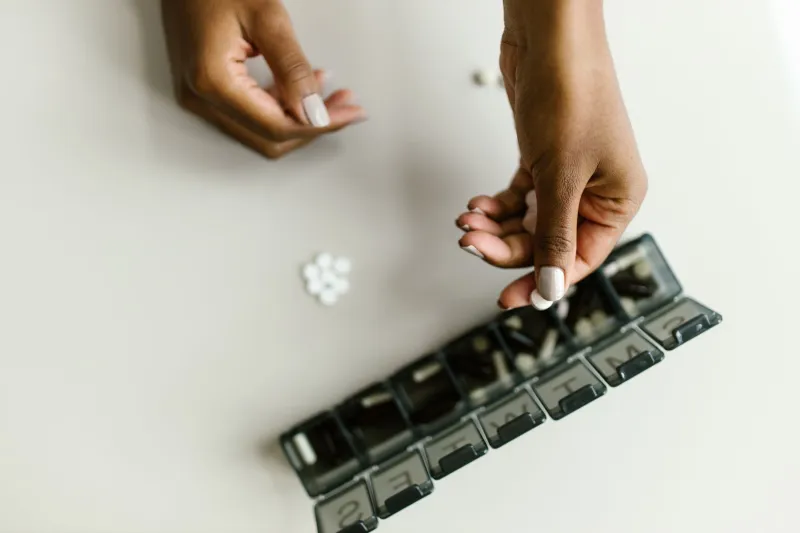
A periodic review of your home medication supply is a worthwhile habit. Expiration dates are typically printed on the outer carton and on the bottle or blister pack itself. If the date is absent or illegible—which can happen when medications are transferred to pill organisers or secondary containers—treat the medication as expired and consult your pharmacist before using it.
For medications dispensed in bulk by a pharmacy, the expiration date stamped on the vial reflects the manufacturer's original date but may be shortened by the pharmacy if the original container was opened during dispensing. When in doubt, ask.
Canada's take-back programmes, available through many community pharmacies, provide a safe and environmentally responsible method for disposing of expired or unused medications. Flushing medications or placing them in household waste is discouraged due to the documented environmental impact on waterways and soil.
A Final Word on Informed Medication Management
The expiration date on a medication is not a technicality—it is a data point that deserves the same attention as dosage instructions or drug interaction warnings. Understanding what it means, respecting the storage conditions that make it valid, and knowing which medications offer less flexibility are all part of using prescription drugs safely and effectively.
For Canadians managing complex medication regimens or considering building a home supply of essential drugs, a conversation with a licensed pharmacist remains the most reliable starting point. The expertise available through a trusted pharmacy—whether in person or through a reputable online dispensary—is precisely the kind of resource that turns good intentions into genuinely safe practice.